Module 3: Data Structures that Actually Matter
3-1 Stateless vs Stateful
Stateful When the code hold the previous information in the multiple iteration Stateless if can't hold then it is stateless
In general Function is stateless and Object is stateful
Lexical Environment: lexical environment is local environment and the reference of outer environment
- Stateless
- Stateful
function counter(amount){
    let count = 0;
    return count + amount;
}

counter(2) // 2
counter(3) // 3
const counter = {
  count: 0,
  add(amount){
      this.count = this.count + amount;
  },
  print(){
      console.log(this.count)
  }
}

counter.add(2);
counter.add(3);
counter.print() // 5
3-2 Basic Class constructor and methods refresher
Pure Function:
It will always return the same output for the same input.
Closer
Closure:
A closure in JavaScript is when a function remembers the variables from its outer scope even after that scope has finished executing.
Closures let you access and use those variables later.
const createCounter = () => {
    let count = 0;

    return (amount) => {
        count = count + amount;
        return count;
    };
};

const counter = createCounter();
console.log(counter(3)); // 3
console.log(counter(5)); // 8
In this example, the inner function still has access to the count variable even after createCounter has finished running.
Class
Class is just like a template. From class we can create object as many as we want.
class Counter {
    constructor(count) {
        this.count = count;
    }

    add(amount) {
        this.count = this.count + amount;
    }

    print() {
        console.log(this.count);
    }
}
const counter1 = new Counter(0);
counter1.add(2); // 2
counter1.add(3); // 5
3-3 Stack Implementation using Array
Stack
Stack is a data stricture that follow Last In First Out (LIFO) principle.
It store data one top of another. it has three methods
- push: To add new element to a stack
- pop: To remove the last element of a stack
- peek: To see the last element of a stack with out remove it
class Stack {
    constructor() {
        this.items = [];
    }
    // O(1)
    push(data) {
        this.items.push(data);
    }
    // O(1)
    pop() {
        if (this.isEmpty()) {
            return undefined;
        }
        return this.items.pop();
    }
    // O(1)
    peek() {
        if (this.isEmpty()) {
            return undefined;
        }
        index = this.items.length - 1;
        return this.items[index];
    }
    // O(1)
    isEmpty() {
        return this.items.length === 0;
    }
    // O(n + n + n) -> O(3n) -> O(n)
    print() {
        console.log(this.items.slice().reverse().join(" -> "));
    }
}
const stack = new Stack(); // create new stack
stack.push(10); // add 10
stack.push(20); // add 20
stack.pop(); // last element 20 remove
stack.peek(); // 10
3-4 Queue Implementation using Array
Queue
Queue is a data structure that follow First In First Out (FIFO) principle. It has two methods:
- enqueue: Insert a element in a queue.
- dequeue: Remove the first element of a queue
- front/peek: View the front (or first) element of a queue.
class Queue {
  constructor() {
    this.items = [];
  }
  //O(1)
  enqueue(element) {
    this.items.push(element);
  }
  O(n)
  dequeue() {
    if (isEmpty()){
      return undefined
    }
    return this.items.shift();
  }
  // O(1)
  front() {
    if(isEmpty()){
      return undefined
    }
    return this.items[0];
  }
  // O(1)
  isEmpty(){
    return this.items.length === 0
  }
}
const queue = new Queue()
3-5 Linked-list - A Visual Representation
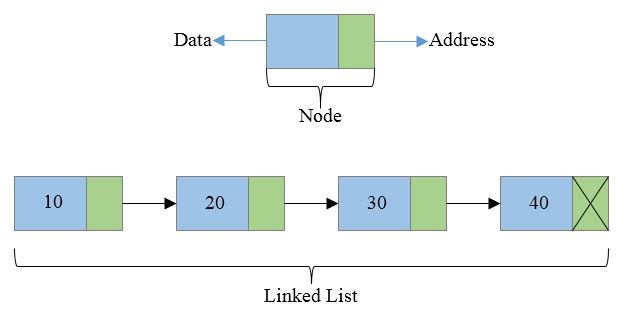
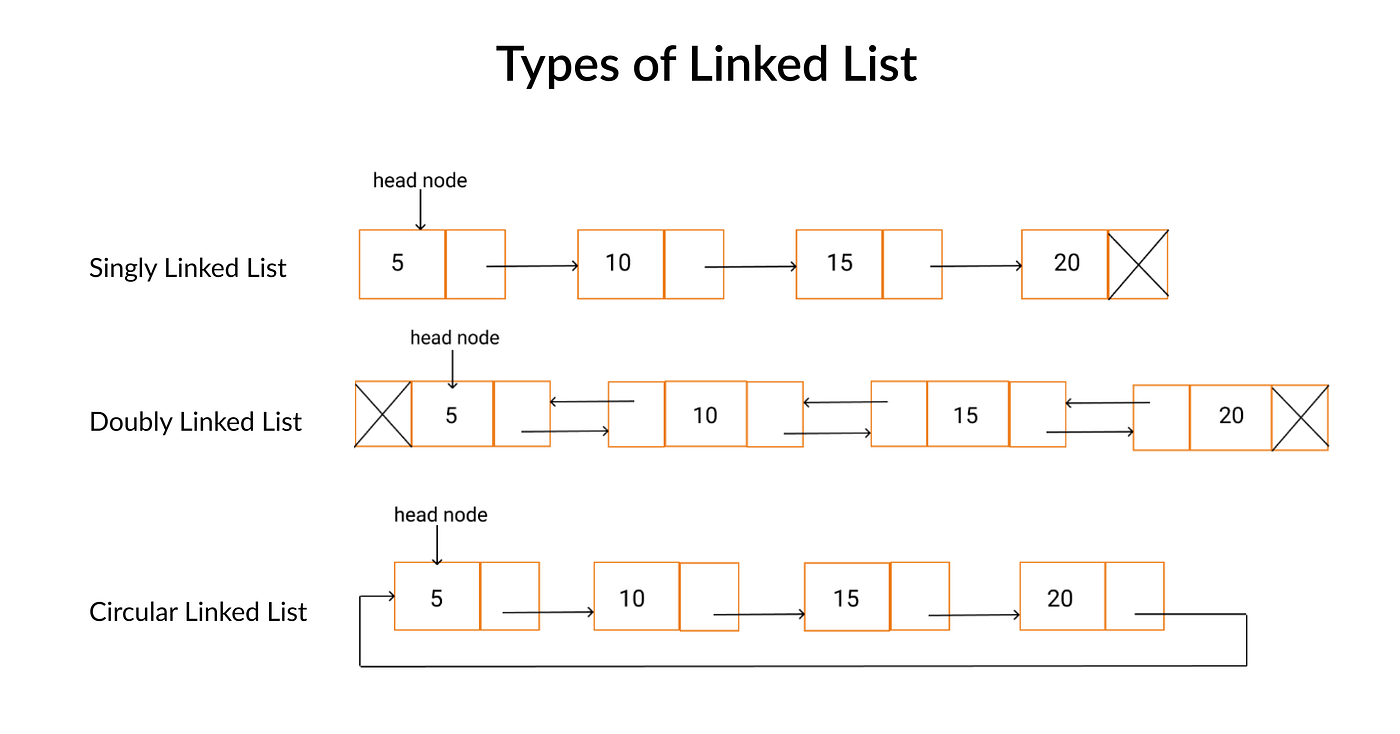
In linked list, it is a list of nodes and each nodes can contain value and can connect in next node and previous node using pointer.
-
Head: If the node does not have any previous node pointer then it is first node or head.
-
Tail: If the node does not have any last node pointer then it is last node or tail.
-
Node: combined of data and next (pointer address of next node)
3-6 Linked List Implementation - Basic concept of Node
class Node {
    constructor(value) {
        this.value = value;
        this.next = null;
    }
}
const head = new Node(10);
head.next = new Node(20);
head.next.next = new Node(30);

// print linked list
let temp = head;
while (temp !== null) {
    console.log(temp.value);
    temp = temp.next;
}
3-7 Linked List Implementation - append() and print()
class Node {
    constructor(value) {
        this.value = value;
        this.next = null;
    }
}

class Linkedlist {
    constructor() {
        this.head = null;
        this.tail = null;
        this.length = null;
    }

    // add vlue at the end of the list like push
    append(value) {
        const newNode = new Node(value);
        // if Linkedlist is empty
        if (this.head === null) {
            this.head = newNode;
            this.tail = newNode;
        } else {
            // if Linkedlist is not empty
            this.tail.next = newNode;
            this.tail = newNode;
        }
        this.length++;
    }

    prepend() {}

    insert() {}

    remove() {}

    print() {
        let currentNode = this.head;
        const arr = [];

        while (currentNode !== null) {
            arr.push(currentNode.value);
            currentNode = currentNode.next;
        }
        console.log(arr.join(" -> "), "-> null ");
    }
}

const list = new Linkedlist();
list.append(5);
list.append(6);
list.print();
3-8,9,10 prepend(), insert(), remove()
class Node {
    constructor(value) {
        this.value = value;
        this.next = null;
    }
}

class LinkedList {
    constructor() {
        this.head = null;
        this.tail = null;
        this.size = 0;
    }

    append(value) {
        const newNode = new Node(value);

        // if list is empty
        if (!this.head) {
            this.head = newNode;
            this.tail = newNode;
        } else {
            // if list is not empty
            this.tail.next = newNode;
            this.tail = newNode;
        }
        this.size++;
        // append(value).append(value)
        return this;
    }

    // add value in begening of list like shift in js
    prepend(value) {
        if (!this.head) {
            this.append(value);
            return this.size;
        } else {
            const newNode = new Node(value);
            newNode.next = this.head;
            this.head = newNode;
            return ++this.size;
        }
    }

    insert(index, value) {
        if (index < 0 || index > this.size) {
            console.log("Index out of bound");
            return undefined;
        } else if (index === this.size) {
            this.append(value);
        } else if (index === 0) {
            this.prepend(value);
        }
        const newNode = new Node(value);

        let leadingNode = this._traversToIndex(index - 1);
        newNode.next = leadingNode.next;
        leadingNode.next = newNode;
        return ++this.size;
    }

    // Private Helper Function
    _traversToIndex(index) {
        let count = 0;
        let current = this.head;
        while (count !== index) {
            current = current.next;
            count++;
        }
        return current;
    }

    remove(index) {
        if (index < 0 || index >= this.size) {
            console.error("Index out of bound");
            return undefined;
        }
        if (!this.head) {
            console.error("Linked List is empty");
            return undefined;
        }
        if (index === 0) {
            this.head = this.head.next;
            if (this.size === 1) {
                this.tail = null;
            }
            this.size--;
            return;
        } else {
            const leadingNode = this._traversToIndex(index - 1);
            leadingNode.next = leadingNode.next.next;
            if (leadingNode.next === null) {
                this.tail = leadingNode;
            }
            this.size--;
            return;
        }
    }

    print() {
        let current = this.head;
        let result = "";

        while (current) {
            result = result + current.value + " => ";
            current = current.next;
        }
        result += "null";
        console.log(result);
    }
    size() {
        return this.size;
    }
}

const roll = new LinkedList();

roll.append(10);
roll.append(20);
roll.append(30);
roll.append(40);
roll.append(50);
roll.print();
roll.remove(roll.size - 1);
roll.print();
roll.remove(0);
roll.print();
3-10 Queue Implementation with Linked List
class Node {
    constructor(value) {
        this.value = value;
        this.next = null;
    }
}

class Queue {
    constructor() {
        this.head = null;
        this.tail = null;
        this.size = 0;
    }

    // O(1)
    enqueue(value) {
        const newNode = new Node(value);

        // if Linked List is empty
        if (!this.head) {
            this.head = newNode;
            this.tail = newNode;
        } else {
            // if Linked List is not empty
            this.tail.next = newNode;
            this.tail = newNode;
        }
        return ++this.size;
    }

    //  remove the first element from the queue
    //  O(1)
    dequeue() {
        if (isEmpty()) {
            return undefined;
        }
        const value = this.head.value;
        this.head = this.head.next;
        this.size--;

        if (!this.head) this.tail = null;
        return value;
    }
    // O(1)
    front() {
        return this.head ? this.head.value : undefined;
    }

    // O(1)
    length() {
        return this.size;
    }

    // O(1)
    isEmpty() {
        return this.head === null;
    }
    // O(n)
    print() {
        let result = "";
        let currentNode = this.head;

        while (currentNode) {
            result += currentNode.value + " -> ";
            currentNode = currentNode.next;
        }
        result += "null";
        console.log(result);
    }
}

const line = new Queue();
line.enqueue(4);
line.enqueue(5);
line.print();